The Cost of Manual RCM — And the Opportunity Hiding Inside It
You’re Paying Trained Financial Coordinators to Do Robotic Work
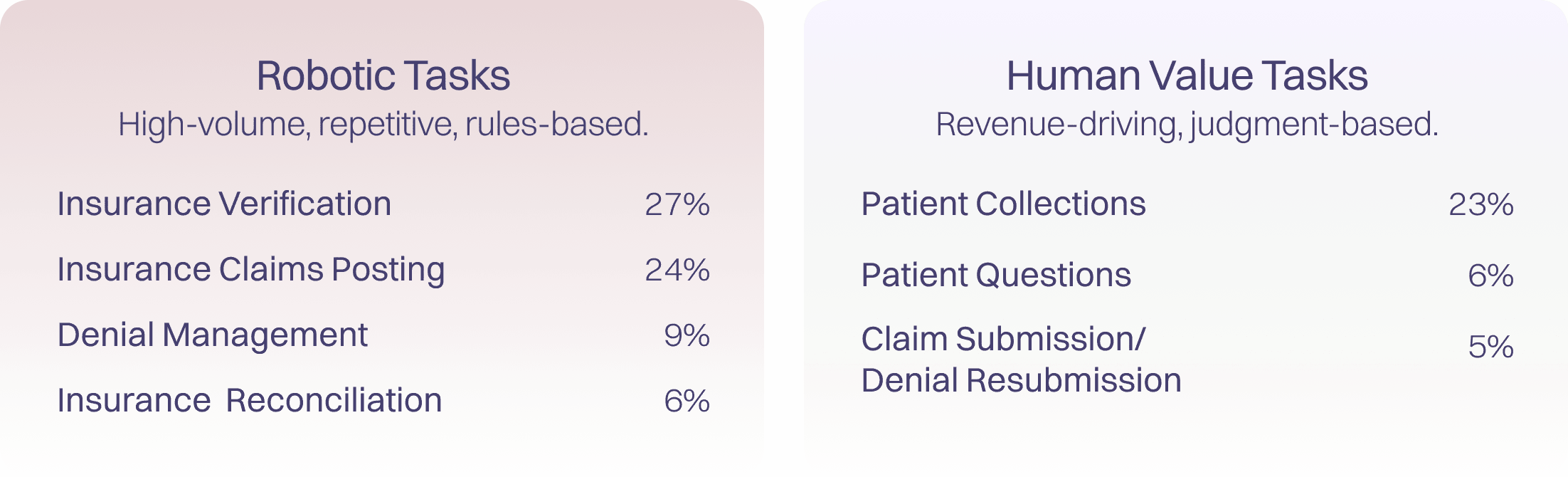
Across practices, Financial Coordinators spend most of their day on tasks automation handles better — posting payments, verifying insurance, reconciling payments, and preparing denials.
This also creates key-person risk. When one FC owns all of this work, any turnover or PTO forces the practice to retrain someone from scratch, and posting and claims can fall behind almost immediately.
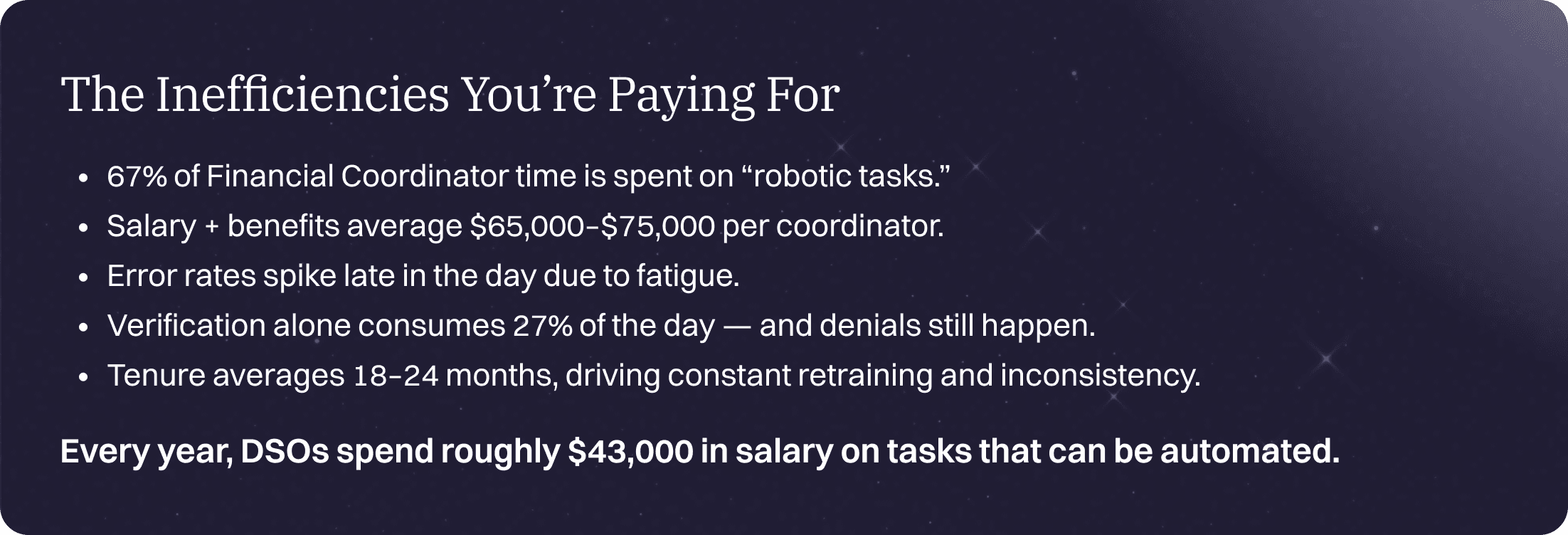
Yet practices continue spending fully-loaded salaries on manual work instead of revenue-driving work.
Most of Your FC’s Day Is Spent on Work AI Can Do Better

The Work Slowing Your Revenue Cycle Down Is the Work AI Handles Perfectly
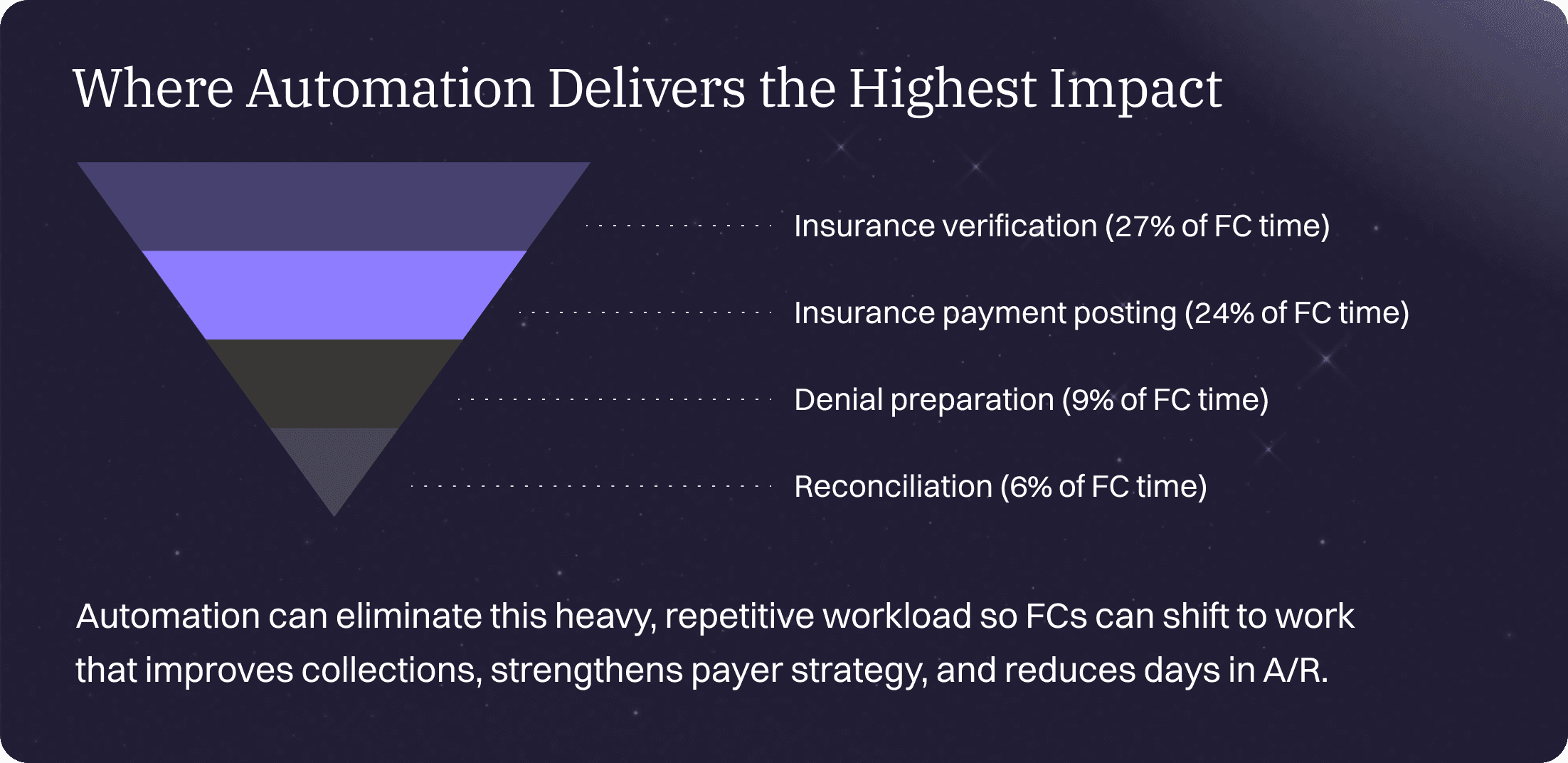
When you break down the FC workflow, the opportunity becomes obvious. The same tasks that consume most of an FC’s day are the tasks automation handles with perfect consistency. This is not about replacing people — it’s about eliminating the bottlenecks that keep your revenue cycle reactive, not strategic.
What Changes When You Automate — And the Financial Impact
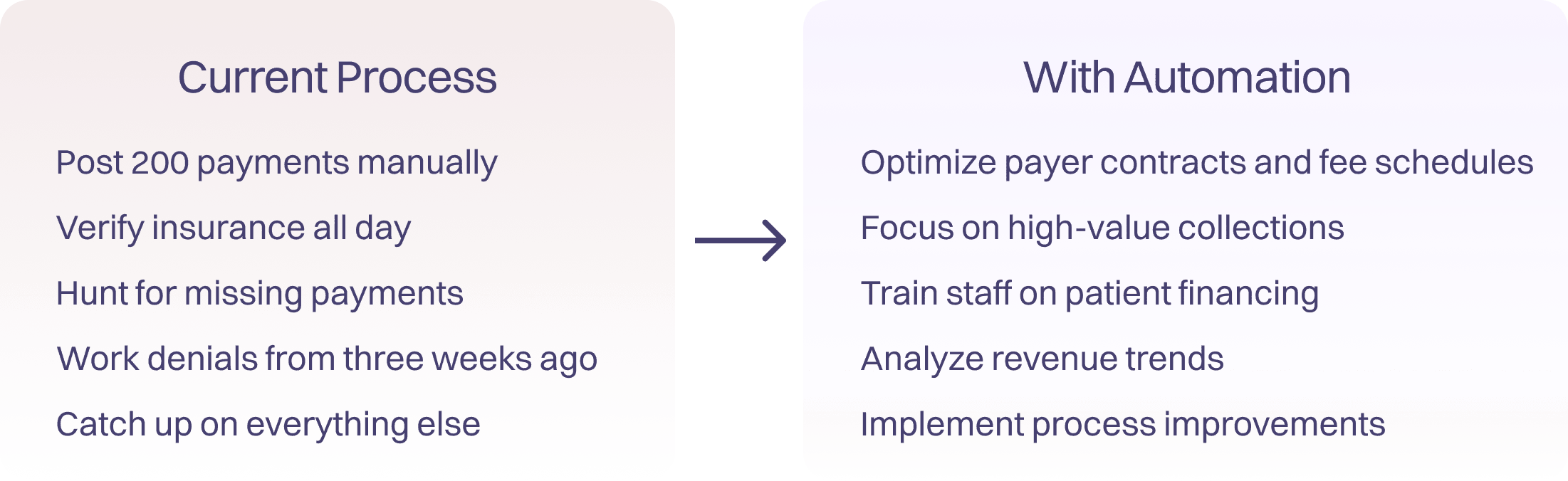
The biggest shift isn’t just the hours saved — it’s the shift in how your team uses those hours. When robotic work is automated, FCs move from reactive tasks to revenue-driving work. And once their time is reallocated, the financial impact becomes immediate and measurable.
How the FC Week Changes

The ROI of Shifting FC Time to High-Leverage Work
When manual, repetitive tasks are removed, FCs spend more of their time on activities that accelerate collections, reduce A/R, and improve claim throughput.
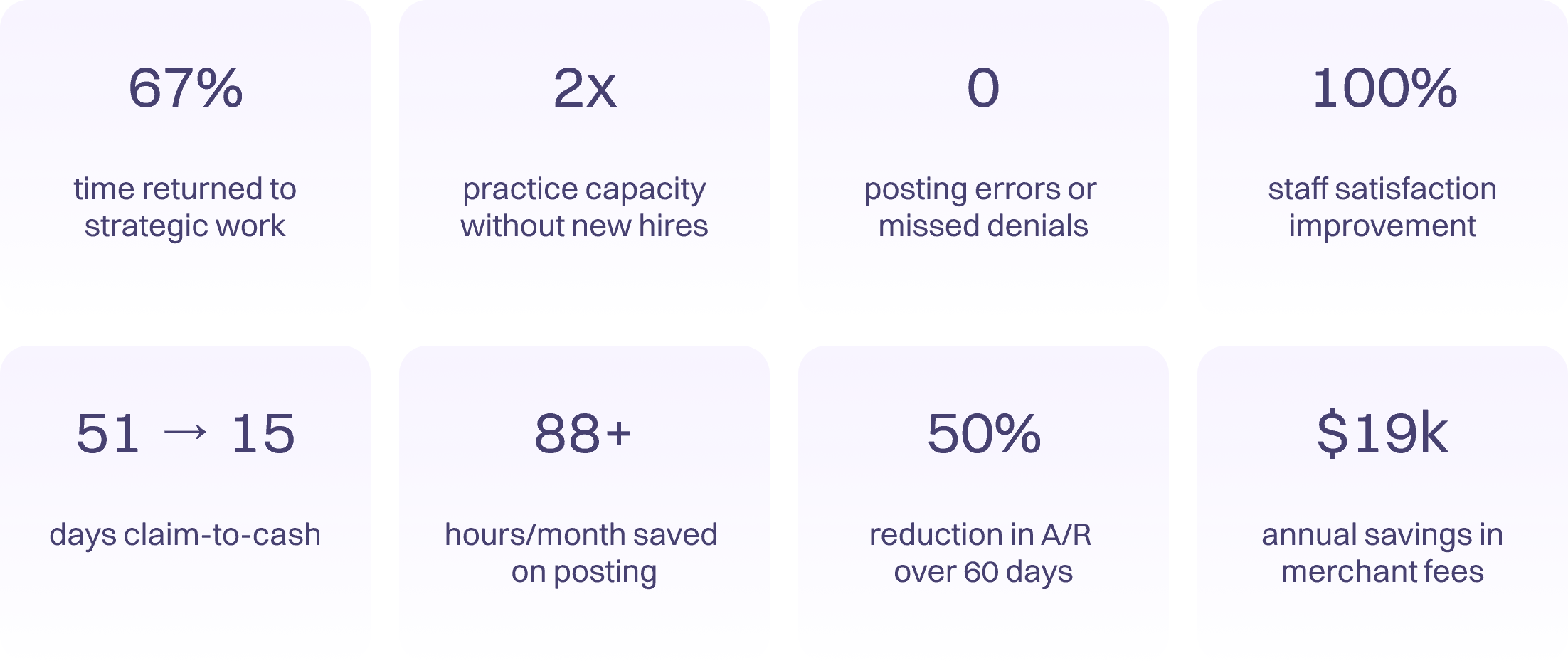
The result: faster cash flow, fewer aged claims, and a more predictable revenue cycle — all without adding headcount.